









As China’s capital markets across the mainland and Hong Kong open up to capture nascent opportunities, regulators are more determined than ever to ensure accountability at the highest corporate level, writes Kevin Cheng
The capital markets are inviting. For the many hard tech, biotech, AI and other emerging sector startups sprouting across the nation, a listing in Hong Kong or the Chinese mainland may have never seemed more accessible, with stock exchanges keenly adjusting entry standards to accommodate their special circumstances, favourably comparing their immense growth potential to any risks.
On the flip side, the markets are also intimidating. More closely than ever, regulators are scrutinising all listed companies, applicants, sponsors and other intermediaries for cracks that might compromise the integrity and well-being of the whole, with top executives and decision makers increasingly held accountable personally for any misgivings.
In 2026, both sentiments, opposite as they may seem, ring true.
The A+H phenomenon
Despite regional conflicts and the Strait of Hormuz crisis shaking up major bourses worldwide – the S&P 500 dropped 9% at one point and South Korea’s KOSPI plunged 12% in a single day – Hong Kong’s capital markets this year have remained largely unfazed, especially in terms of the ability to attract new listings.
During the first four months, the Hong Kong Stock Exchange (SEHK) saw 49 new IPOs, up from 19 in the same period of 2025. These new listings raised a total of HKD151.4 billion (USD19.3 billion), up from HKD21.5 billion last year, allowing the city to retain its number one status among IPO venues worldwide when valued by funds raised.
The momentum carried over from 2025, when Hong Kong clinched the top spot after hosting 119 listings, raising more than HKD280 billion, including four of the world’s top 10 IPOs of the year, with CATL alone raising HKD41 billion. Encouragingly, the bustle is expected to last for some time. As of May 2026, almost 500 applicants are lining up for a green light from the SEHK’s listing committee.
The impetus is driven to no small degree by secondary listings of A-share companies – those already listed in Shanghai or Shenzhen. According to Dealogic data, 20 out of the top 30 listings in Hong Kong in terms of total proceeds, dated between April 2025 and March 2026, were secondary. Furthermore, nine out of the 10 largest deals were secondary listings, the only exception being Zijin Gold International, a local spinoff of Zijin Mining Group, itself an A+H company.
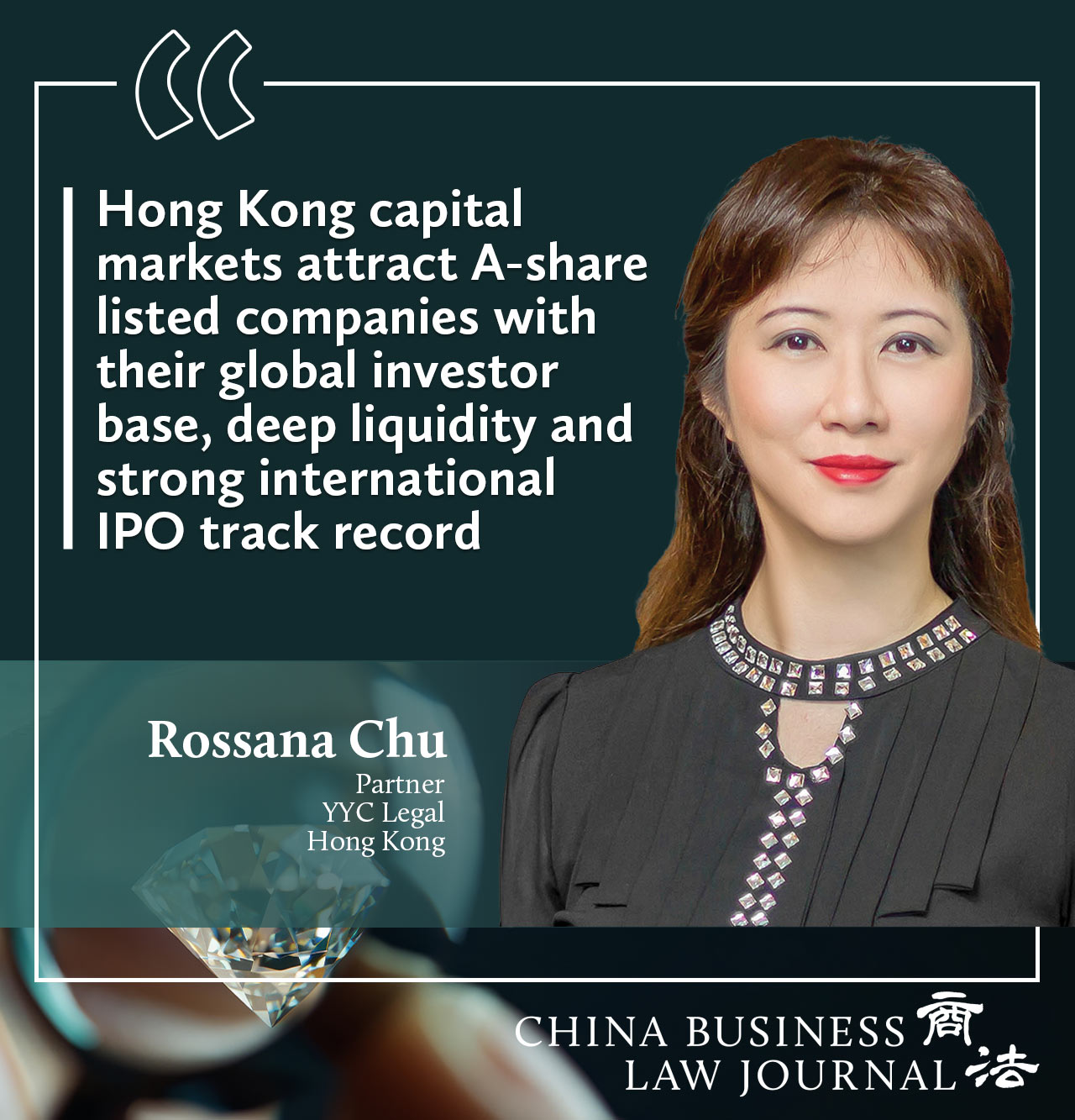
“Hong Kong capital markets attract A-share listed companies with their global investor base, deep liquidity and strong international IPO track record,” says Rossana Chu, a Hong Kong-based partner at YYC Legal. She cites the enhanced corporate profile and market recognition that come with a Hong Kong listing as an important factor, especially if the company “intends to expand into overseas markets or attract investment beyond China”.
Such luring benefits carry significant risks. Dual listing also means dealing with two sets of compliance obligations, requiring skilful reconciliation of the timing, accounting and disclosure differences.
“From a legal perspective confidentiality is of the utmost importance as the H-share listing may be price-sensitive for the A-share markets,” says Benita Yu, senior partner at the Hong Kong office of Slaughter and May.
“Equal dissemination of information between the PRC and Hong Kong in the whole process, including investor education, prospectus disclosures and research report disseminations, should be handled carefully,” she says.
Considering that A+H listings took up 61% of the total funds raised in Q1 2026 on the SEHK, according to KMPG’s quarterly IPO market report, it is fair to surmise that the temptations are thus far outweighing the concerns.
Hong Kong gloss-up
Hong Kong has been an attractive venue for prospective listed companies in the Chinese mainland, and efforts are being made to make it even more so, especially towards applicants in the much-coveted tech and biomedicine sectors.
In March 2026, Hong Kong Exchanges and Clearing Limited (HKEX), owner of the SEHK, unveiled a series of reforms to enhance listing competitiveness. In its March consultation paper, the HKEX proposed to, among other things, reduce the market capitalisation thresholds for listing with a weighted voting rights (WVR) structure, from HKD40 billion to HKD20 billion. The WVR ratio cap is set to be bumped up from 10:1 to 20:1.
Ma Yunyan, a senior partner at the Shenzhen head office of Sundial Law Firm, says that WVR structures are most desired by the major shareholders and core management of startups, especially high-tech founders. Under the “equal shares, equal rights” structure, founders’ equity becomes diluted with new financings, leading to a loss of decision-making capability or, in many cases, lawsuits.
“The market in general cautiously welcomes the reform, recognising that it helps founders retain control and avoid decision-making deadlock,” says Ma. Nevertheless, she notes that the WVR and increased cap apply to only a small number of companies.
The underlying objective of the proposed change, says Chu, is to “attract high-potential companies in new economy sectors to list in Hong Kong, rather than in the US,” noting that they ensure the Hong Kong standards would not be seen as “restrictive” in comparison.
Furthermore, the HKEX proposed that confidential filing previously reserved for secondary listings, biotech companies and specialist technology companies be made accessible to all candidates going forward.
“If implemented, I believe Hong Kong will be a more attractive listing venue, drawing a wider range of companies to list here, which could lead to a potentially expanded pipeline of IPO mandates across more varied sectors and issuer profiles,” says Geng Ke, a Beijing-based partner at 翱’惭别濒惫别苍测.
No compromise on quality
However, if applicants assumed, based on the relaxation measures, that they would be welcomed with open arms onto the main board, with the carpet rolled out and the HKEX gong at the ready, they might be in for a rude awakening.
In a circular dated January 2026, the Securities and Futures Commission (SFC) of Hong Kong voiced concerns over the “declining quality of draft listing documents as well as certain substandard conduct of licensed corporations carrying out sponsor work”.
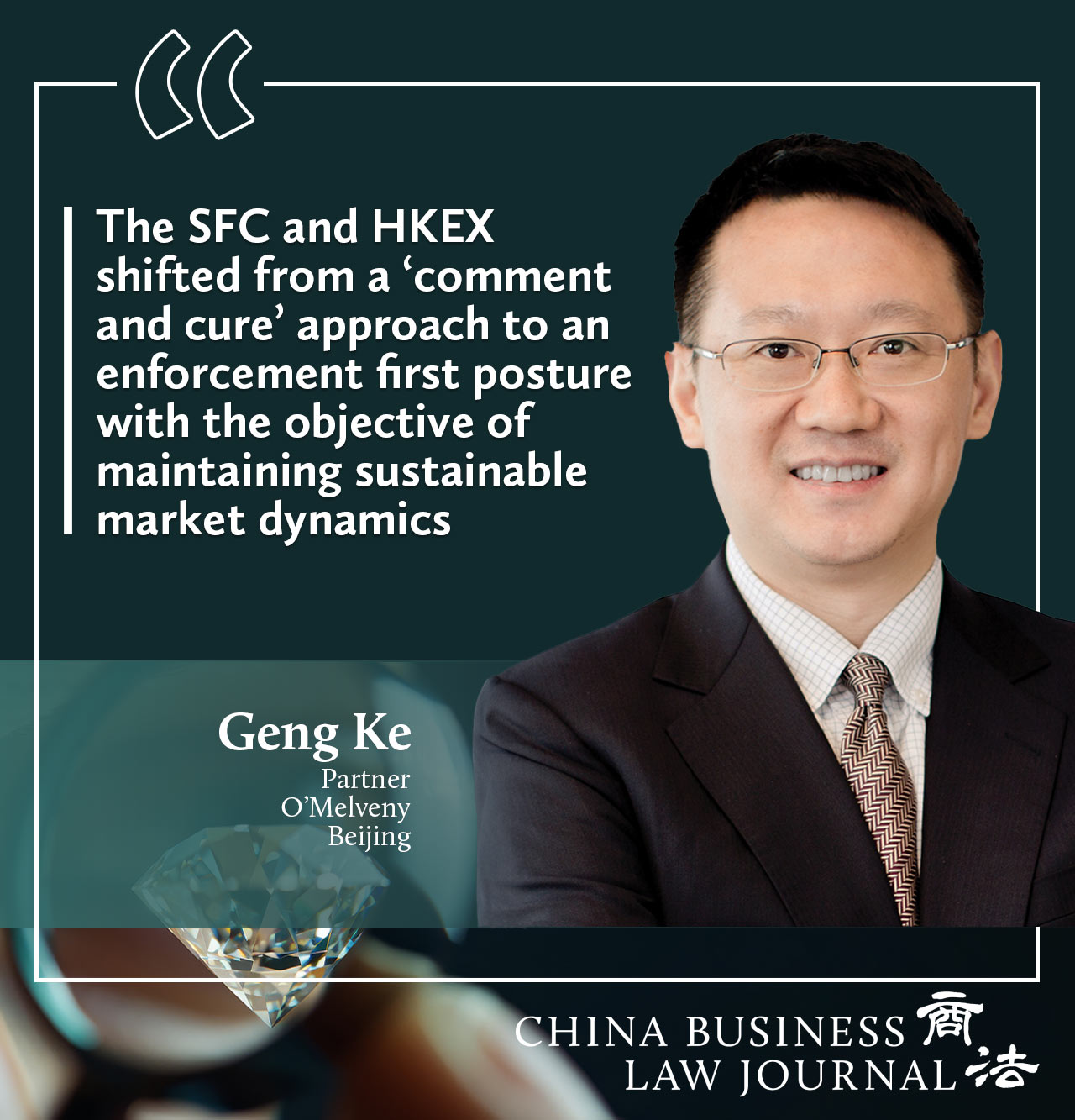
“The tightening of sponsor oversight and prospectus quality … appears to be a regulatory response triggered by the heated Hong Kong IPO market,” says Geng. “The SFC and HKEX shifted from a ‘comment and cure’ approach to an enforcement first posture with the objective of maintaining sustainable market dynamics.”
The SFC found many sponsors over-reliant on third-party experts and critically understaffed for the vast quantities of current and expected listing tasks. Particularly under scrutiny was the capacity of principals – licensed individuals appointed by sponsors to lead and supervise the IPO processes.
Notably, the SFC requires that sponsors, going forward, demonstrate via a signed document that no principal is simultaneously working on six or more active listings. Furthermore, the main body of prospectuses, excluding the appendices, shall not exceed 300 pages.
Ma says these two measures “move forward the responsibilities of prospectus quality control to sponsors and legal counsel, drastically increasing law firms’ professional and reputational risks”.
She nevertheless welcomes the shake-up, describing the measures as timely and necessary. “Sponsors and other intermediaries should not lessen their commitment to a project simply because they lack qualified personnel or are dealing with too much business volume,” she says.
“Nor should they tolerate superficial and generic risk disclosure in prospectuses that demonstrate none of the unique traits of the issuer, just to pass the listing hearing.”
The measures’ effect on sponsors was both obvious and immediate. “We have seen sponsors relinquishing their sponsorship of ongoing deals and there being a slowdown in their taking of new deals,” observes Yu. “Thus, the pipeline of listing applications may slow down this year.”
Wu Lianhua, a Beijing-based partner at DeHeng Law Offices and head of the firm’s securities committee, says that the SFC measures could most directly affect the pending A+H listings. She cites overseas businesses, data compliance, international sanctions, client and supply chain concentration, related party transactions, ESG and continued compliance as areas that lately receive the most detailed HKEX enquiries.
“It is likely that some A+H listings will take longer as a result,” she says.
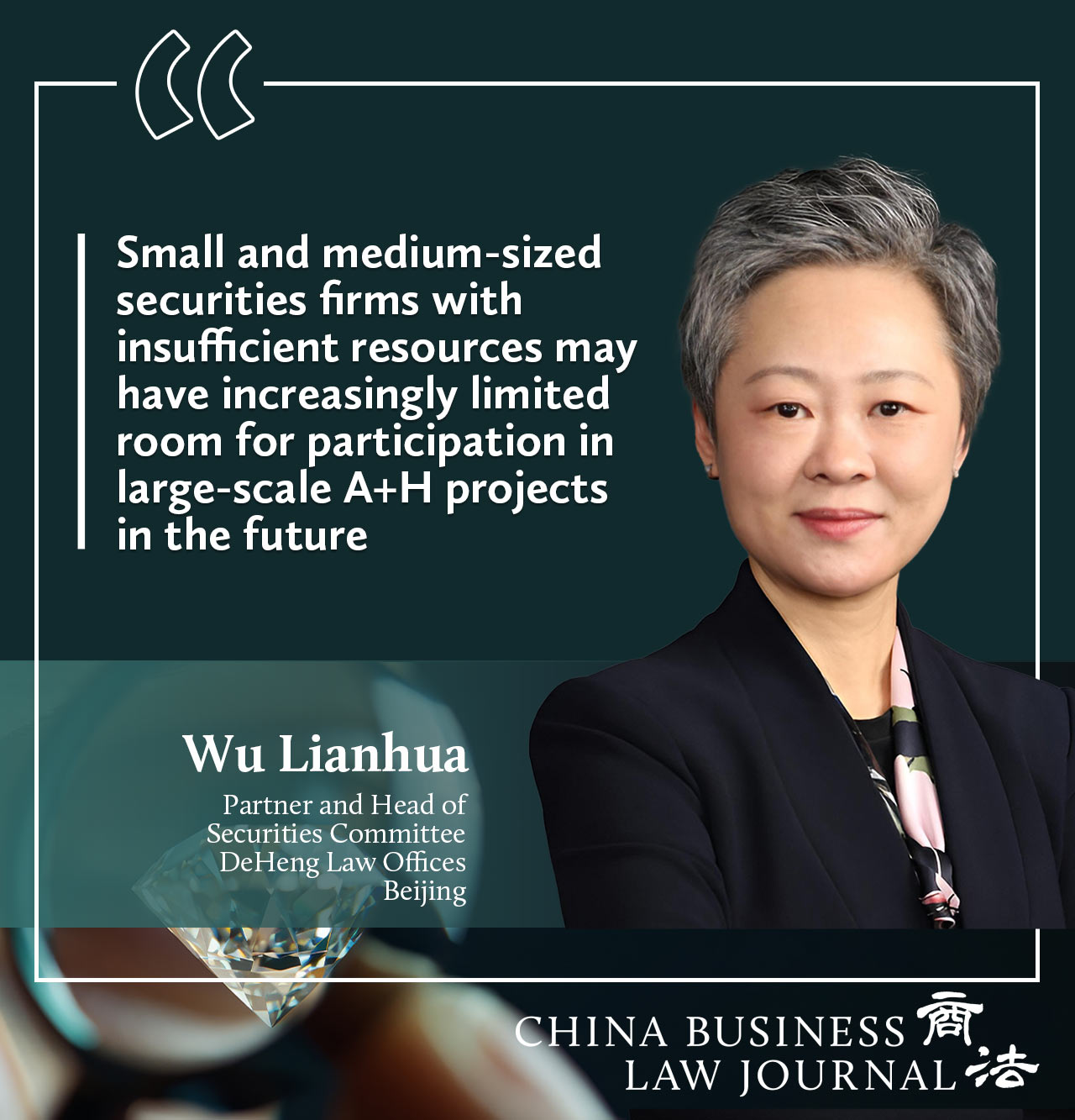
In addition, owing to the extra complexity of A+H listings, Wu predicts further market concentration towards the leading investment banks. “Small and medium-sized securities firms with insufficient resources may have increasingly limited room for participation in large-scale A+H projects in the future,” she says.
The impact of these measures upon legal advisers is less talked about, but Geng nevertheless believes it to be profound. “Lawyers cannot function merely as passive drafters executing issuers’ or sponsors’ instructions,” he says. “We see ourselves as co-gatekeepers bearing direct and personal regulatory exposure for prospectus quality.
“This recalibration is already reshaping the competitive landscape, and I expect it to reward diligent, compliance-focused, and quality-oriented legal advisers over time.”
Echoing this sentiment, Yu says: “Prospective listing applicants may focus on the quality of advice and sufficiency of resources of the intermediaries, rather than the number of deals they have done or how low their fees can be.”
You must be a
subscribersubscribersubscribersubscriber
to read this content, please
subscribesubscribesubscribesubscribe
today.
For group subscribers, please click here to access.
Interested in group subscription? Please contact us.
你需要登录去解锁本文内容。欢迎注册账号。如果想阅读月刊所有文章,欢迎成为我们的订阅会员成为我们的订阅会员。
Practitioner’s Perspective Article Series
Preserving listing status against delisting red lineBy Xu Zhiyuan, Tahota Law Firm |
 |
IPO alternative: Public M&A route to capital marketsBy Kang Xiaoyang, Kangda Law Firm |
 |
Unwinding red-chip structuresBy Vincent Shen, Commerce & Finance Law Offices |
 |