










A survey conducted by CBLJ found three major factors help in-house counsel identify their ideal lawyers, but a closer look reveals more to the matter than meets the eye. Jeffrey Huang reports
Amid global economic volatility and an increasingly complex regulatory landscape, the bond between companies and their external counsel has grown unprecedentedly tight. Their profound involvement is indispensable, whether charting new territories and executing strategic initiatives or navigating high-stakes disputes in court.
While cultivating a robust network of premium legal partnerships is a prudent strategy, legal departments frequently need to tap fresh expertise when expanding their business footprint or confronting emerging risks. Faced with a wide array of candidates in the legal market, what do executives and general counsel value most in the current climate, and what are their ultimate criteria for selecting external legal advisers?
China Business Law Journal surveyed corporate executives and general counsel attending an in-house counsel summit in Shanghai a few months ago, alongside the recently unveiled winners of the In-house Counsel Awards 2026. The findings revealed the three factors most prized by in-house counsel, in order of priority: track record; service stability; and pricing.
Song Jie, chief compliance officer and general counsel at CCEED Northwest Branch, notes that these three factors and their hierarchical order closely align with the practical demands of his regional branch of a state-owned construction enterprise when engaging external legal advisers across areas such as construction engineering, commercial disputes and intellectual property.
When retaining external counsel, the company consistently prioritises hands-on track records in similar construction cases, he says. This is followed by a focus on service reliability and team stability, before finally making a balanced assessment of legal fees to eschew both low-cost and low-quality service, and unjustifiable premiums.
Liang Xingbo, general counsel at BUCG International, an international arm of Beijing Urban Construction Group, says: “This hierarchy holds entirely true in our day-to-day management of external legal resources, having been validated across multiple major projects.”
Beyond these three core elements, the survey captured other metrics referenced by in-house counsel, encompassing a law firm’s brand reputation, size, star partners, awards from legal media, and its commitment to regularly publishing professional insights.
Evaluating law firms, however, is far from a mere checklist and comparison of these factors. Behind every seemingly straightforward indicator lies a deeper layer of corporate scrutiny and strategic calculation.
Industry experience
While a track record may be the most intuitive and crucial gauge of a lawyer’s capability, some executives and general counsel believe true value lies not in the sheer transaction value of past projects, or the prestige of former clients. Instead, it is whether these experiences demonstrate the lawyer’s deep engagement with and understanding of the client’s industry.
Joanna Wang, general counsel and board secretary at InSilico Medicine, a biotech company that develops proprietary generative AI for drug discovery and life sciences research, says: “A stellar track record is measured not just by the volume of high-profile deals or cases, but by a deep understanding of our industry, business goals and key risk areas, alongside the ability to exercise sound judgement across diverse matters.”
When scouting for external counsel, the legal department of Alibaba’s AI division similarly prizes an understanding of the tech sector.
Liu Jiaxin, legal director of the Qwen Division, ATH Business Group, Alibaba Group, says that while a legal team’s past litigation success rate is important, their genuine comprehension of the technical logic behind AI products matters more.

“When handling generative AI copyright disputes, a lawyer’s ability to precisely distinguish the technical boundaries between ‘training data usage’ and ‘output content infringement’, or clearly explain the ‘Transformer’ mechanics to a judge, is far more valuable than a mere record of victories,” says Liu.
The legal requirements of Everest Medicines, an innovative biopharmaceutical company, are also intertwined with its industry characteristics. Every stage – from clinical trial subject protection and marketing authorisation applications to cross-border licensing and global patent portfolios – involves specialised regulatory mandates and technical nuances.
Tan Xinyao, general counsel and chief compliance officer at the company, says that when retaining external legal advisers, her team values a lawyer’s practical achievements in identical or similar pharmaceutical projects over generalised win rates, law firm brands, or prestigious partner titles.
“When appointing patent litigation counsel, we prioritise examining whether they can accurately interpret complex patent specifications and understand target mechanisms,” says Tan. “In cross-border licensing transactions we focus on whether they have handled global exclusive licensing agreements for the same target; in clinical trial compliance projects we verify whether they have successful case studies assisting companies in smoothly clearing unannounced regulatory inspections.”
Specifically for the company, she adds: “We have established an internal panel of pharmaceutical legal advisers, featuring premium teams vetted by peers and project reviews. This ensures their expertise aligns precisely with our needs.”
Stability over persistence
Corporate expectations for service stability have evolved beyond the basic requirement of keeping personnel unchanged. What executives and general counsel prize is whether an external legal team can maintain a satisfactory response speed, whether the lead partner can sustain a high-quality commitment, and whether institutional safeguards such as backup mechanisms are in place to ensure uninterrupted service during staff transitions.
Gao Lijun, chief compliance officer at hospitality and retail group Atour Lifestyle, says service stability is a core element that directly impacts efficiency, yet is easily overlooked in long-term collaborations. “A large volume of our legal work – such as routine anti-counterfeiting and enforcement, continuous compliance framework building and perennial contract review and business consultation – falls under long-cycle and continuous matters,” says Gao.
“If an external firm frequently replaces its contact personnel, we must repeatedly review the business background and rebuild collaborative trust, which drastically drags down efficiency.”
She focuses on evaluating whether the firm’s team structure is fixed, whether there are personnel capable of stepping in at any time if the primary contact cannot follow up on a project, and whether there are written guarantees for turnaround times and case tracking.
For startups, timely legal support can often turn the tide at critical junctures, placing a premium on the responsiveness of external legal teams. Given this reality, humanoid robot company UBTECH Robotics adopts responsiveness as its ultimate criterion for selecting external counsel.
Zhou Wen, the head of legal at UBTECH Robotics, says the humanoid robot industry features rapid technological iterations and tight business cycles. Coupled with strict regulatory mandates governing a HKEX-listed company, it frequently confronts zero-buffer emergencies – such as time-sensitive replies for Hong Kong disclosures, temporary overseas injunctions, imminent major litigation milestones and cross-border data compliance contingencies – all requiring instantaneous judgement.
“If these matters are not handled in a timely and effective manner, a single hour’s delay can trigger a cascading impact,” says Zhou. “UBTECH does not need clock-punching services; we need reliable partners who can be reached at critical moments and withstand heavy pressure.”
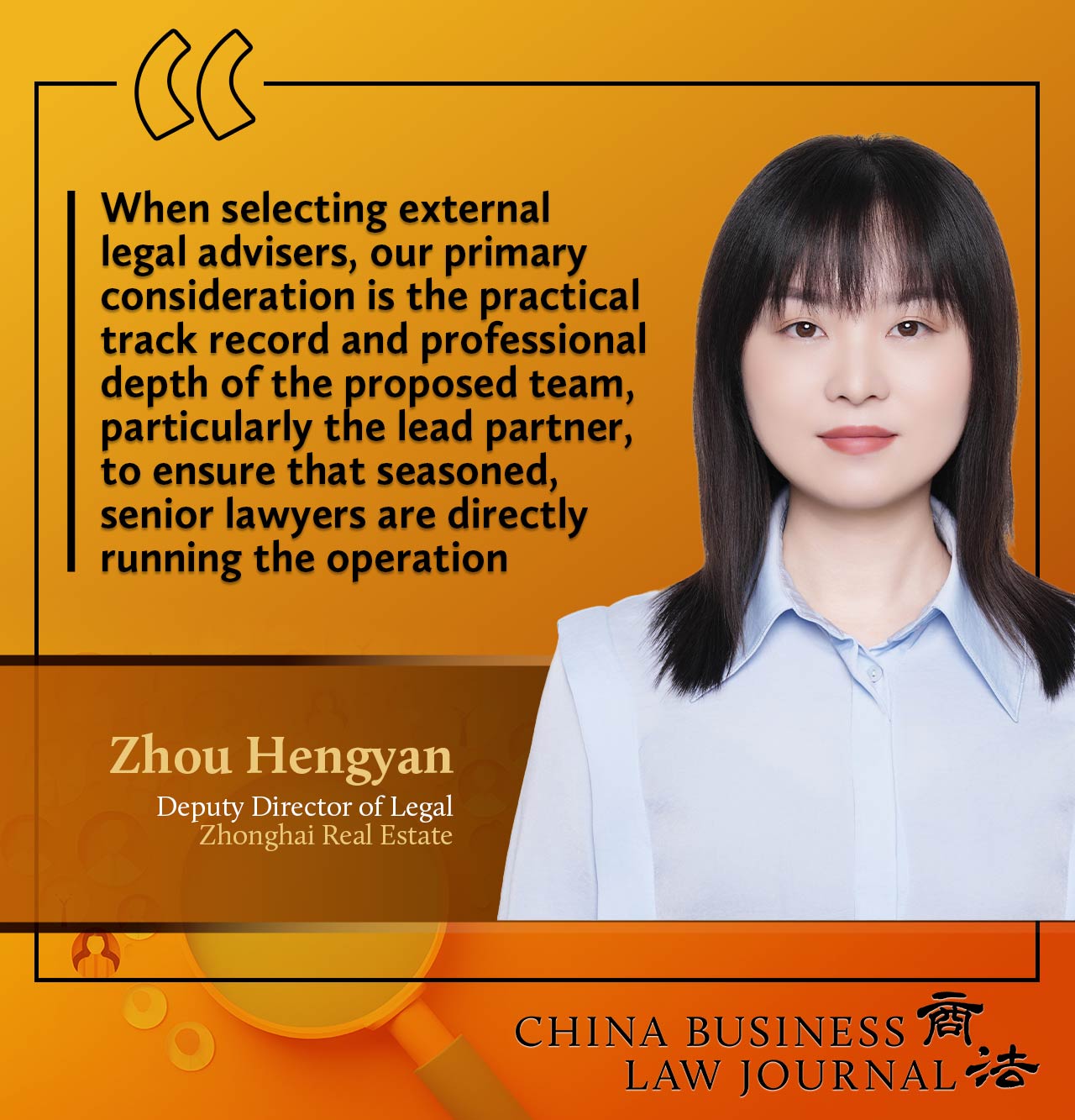
Zhou Hengyan, the deputy director of legal at property conglomerate Zhonghai Real Estate, shares similar considerations. “When selecting external legal advisers, our primary consideration is the practical track record and professional depth of the proposed team, particularly the lead partner, to ensure that seasoned, senior lawyers are directly running the operation,” she says. The company is wary to “strictly curb the phenomenon of partners lending their names while junior associates do the work”.
Value exceeds low cost
When economic headwinds blow and companies compress their expenditure, budgets for legal departments naturally face pressure. However, the vast majority of general counsel reject the simplistic “lowest bidder wins” mindset when appointing external legal advisers. Rather than absolute low prices, they value obtaining certainty in complex cases at a reasonable fee, ensuring that every cent the company spends in the legal market better safeguards its interests.
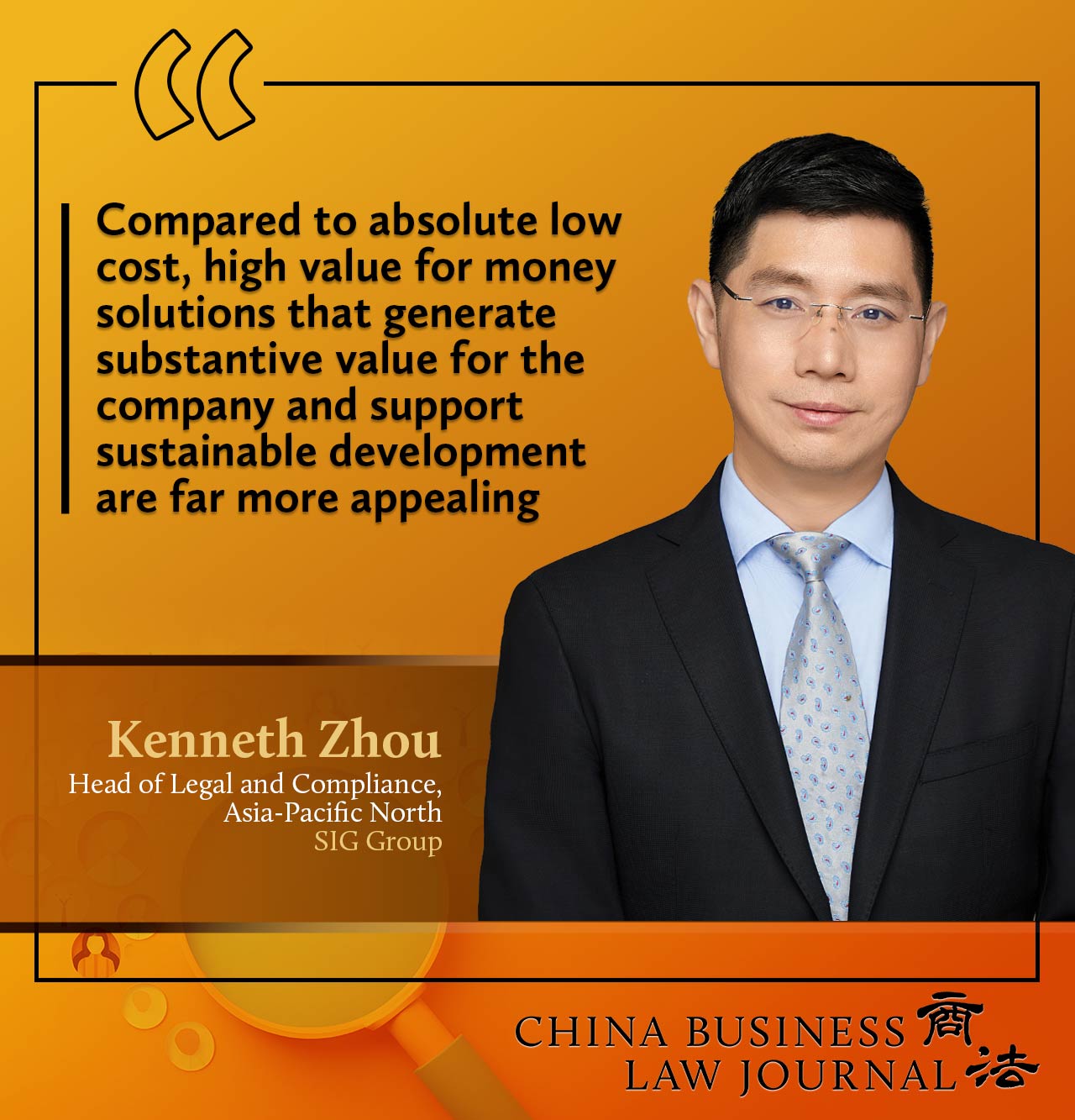
Kenneth Zhou, head of legal and compliance for Asia-Pacific North at Swiss multinational packaging company SIG Group, places a greater premium on the “leverage effect” of legal expenditure, particularly in high-value, high-risk projects such as anti-corruption and data compliance.
“Compared to absolute low cost, high value for money solutions that generate substantive value for the company and support sustainable development are far more appealing,” he says.
For different legal matters, Fu Qi, manager of the enterprise management and investment department at China Offshore Engineering & Technology, adopts distinct pricing strategies. “For standardised and highly substitutable routine legal counsel or mass litigation, the importance of price rises significantly,” says Fu.
“But for highly complex, high-stakes or novel businesses, we weigh the overall circumstances across all aspects and may choose to forego the lowest price in exchange for stronger professional certainty and responsiveness.”
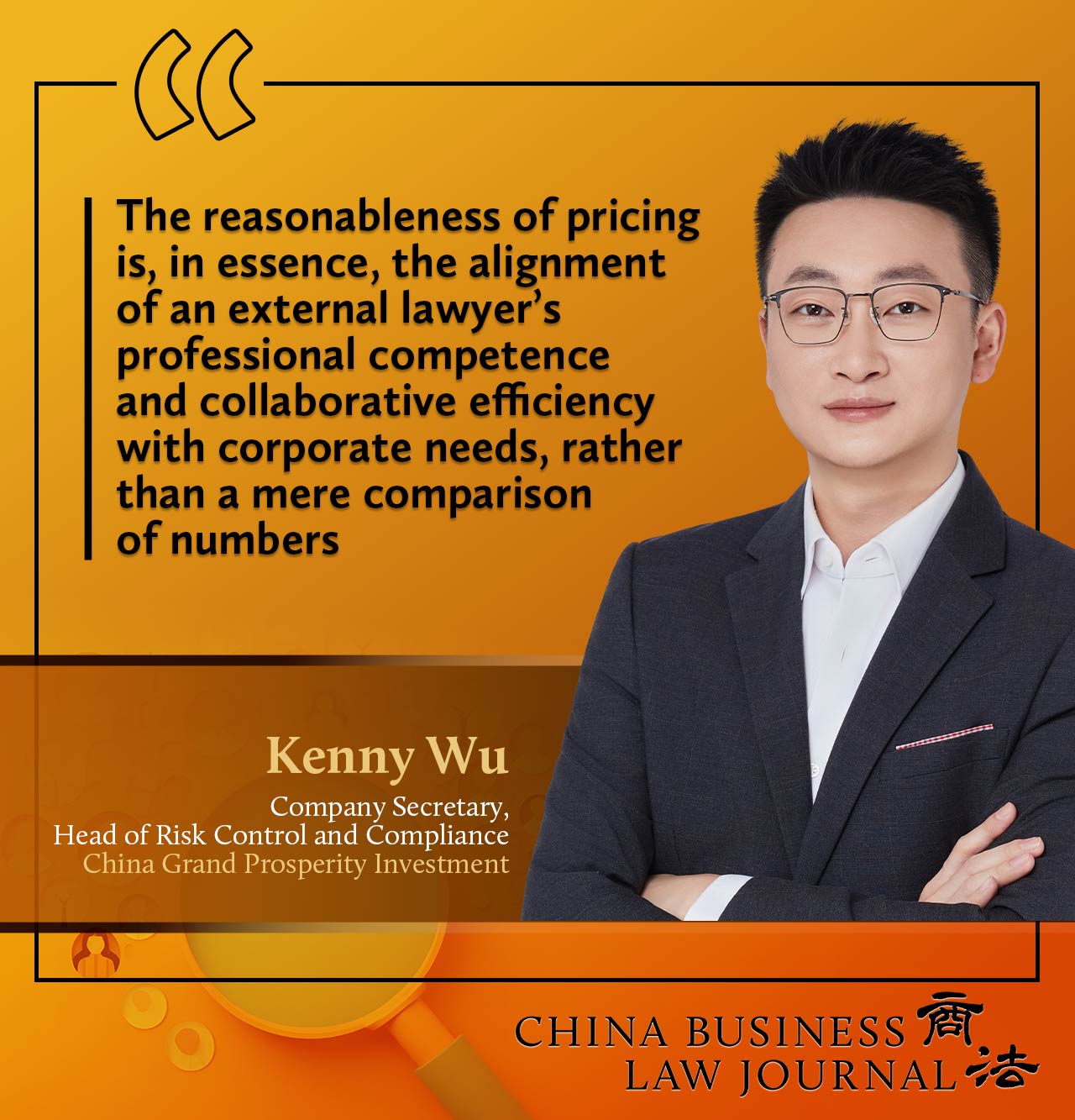
Kenny Wu, company secretary and head of risk control and compliance at fund manager China Grand Prosperity Investment, shares a similar approach. For specialised matters such as major litigation and complex transactions, his team is willing to pay a reasonable premium for matching professional capabilities to avoid the hidden costs of increased subsequent compliance risks and project rework that result from choosing an inexperienced team due to low prices.
Conversely, for standardised and high-frequency routine legal matters, the team prefers to drive internal self-sufficiency or negotiate bundled service pricing with law firms to balance cost and efficiency.
“The reasonableness of pricing is, in essence, the alignment of an external lawyer’s professional competence and collaborative efficiency with corporate needs, rather than a mere comparison of numbers,” says Wu.
Lucie Qiu, director of legal and compliance at investment manager Cephei Capital Management (Hong Kong), emphasises granularity in pricing. Rather than the total price, she looks closely at whether lawyers faithfully log their billable hours and provide advance warning for unforeseen expenses.
Distinct perspectives
Beyond the three above-mentioned core elements, general counsel note a series of highly targeted procurement considerations based on their unique business scenarios. Grounded in practical experience, these distinct perspectives enrich the evaluation dimensions for companies selecting external counsel and provide crucial reference for a comprehensive understanding of the authentic decision-making logic of in-house executives.
For many companies with extensive geographic coverage or outbound expansion needs, an external firm’s ability to consistently deliver high-quality legal services across different regions and jurisdictions is vital. Zhao Wei, deputy general manager of the international department at state-owned engineering contractor Shanxi Installation Group, has long been involved in legal risk prevention and external counsel selection for overseas projects spanning Southeast Asia, the Middle East and Africa.
“It is difficult for a single law firm to possess top-tier capabilities in every jurisdiction,” she says. “Therefore, we prefer external lawyers who command a robust network of local co-operating firms or independent offices who can efficiently lead and co-ordinate multi-jurisdictional legal opinions. The ability to combine a global vision with local practice is far more important than brand recognition.”
Ralph Xu, the vice president and Greater China general counsel at British multinational Unilever, shares similar considerations. “We consider the geographical footprint of the law firm, particularly whether there are local lawyers of acceptable quality available to provide services in lower-tier cities [in China],” he says.
At the Chinese subsidiary of renowned insurance group AXA, the legal department of AXA Tianping P&C Insurance needs to concurrently submit all types of legal opinions and specialised due diligence conclusions to its overseas headquarters for group approval and filing. “The overseas international headquarters’ industry recognition, international reputation and brand credibility regarding the local Chinese law firm serve as an exceptionally critical extra benchmark when we retain external legal advisers,” says Norman Luo, the chief compliance officer.
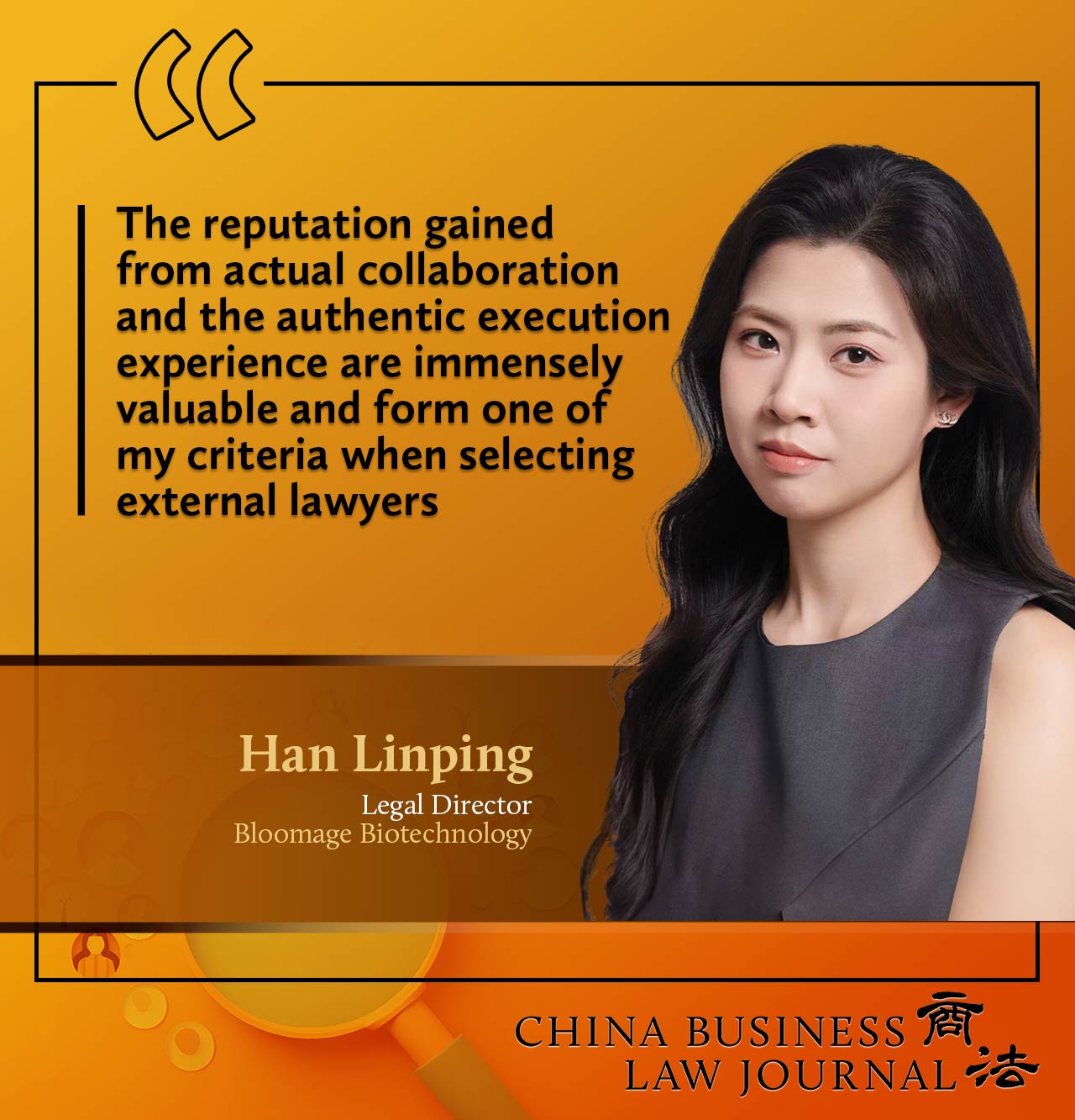
Han Linping, legal director at Bloomage Biotechnology, utilises authentic recommendations from industry peers and fellow in-house counsel as a key reference. “The reputation gained from actual collaboration and the authentic execution experience are immensely valuable and form one of my criteria when selecting external lawyers,” she says. 1.png)
FANTASTIC LAWYERS, AND WHERE TO FIND THEM
Before evaluating the compatibility of external lawyers, regardless of the criteria, general counsel must first build a substantial talent pool of legal service providers – which is by no means an overnight task.
It requires careful evaluation of candidates and continual updating from a wide array of channels. Sourcing channels for external lawyers are highly transparent these days, but which path best suits a company’s immediate needs remains a matter of individual strategic calculation.
In our recent survey of senior executives and general counsel on this matter, nearly all respondents viewed “existing service relationships” as their top choice, prioritising the continuation of current partnerships. “Peer referrals” and “law firm directories” closely followed, while many companies also rely on formal tendering processes to satisfy compliance mandates.

Selecting channels based on business differentiation also emerged as a common approach for many general counsel when choosing external advisers.
Annie Ling, general counsel at fintech company Micro Connect, prioritises longstanding external counsel when handling routine contracts, day-to-day compliance and other foundational matters. Long-term collaboration simplifies the procurement process and drastically reduces communication costs because the lawyers are already intimately familiar with the business, she says.
When confronting high-stakes investment and financing, cross-border business, data compliance, or complex disputes and litigation, she relies more on professional law firm directories, supplemented by peer surveys. Ling also uses simplified tendering to compare the professionalism, pricing and past cases of different candidates.
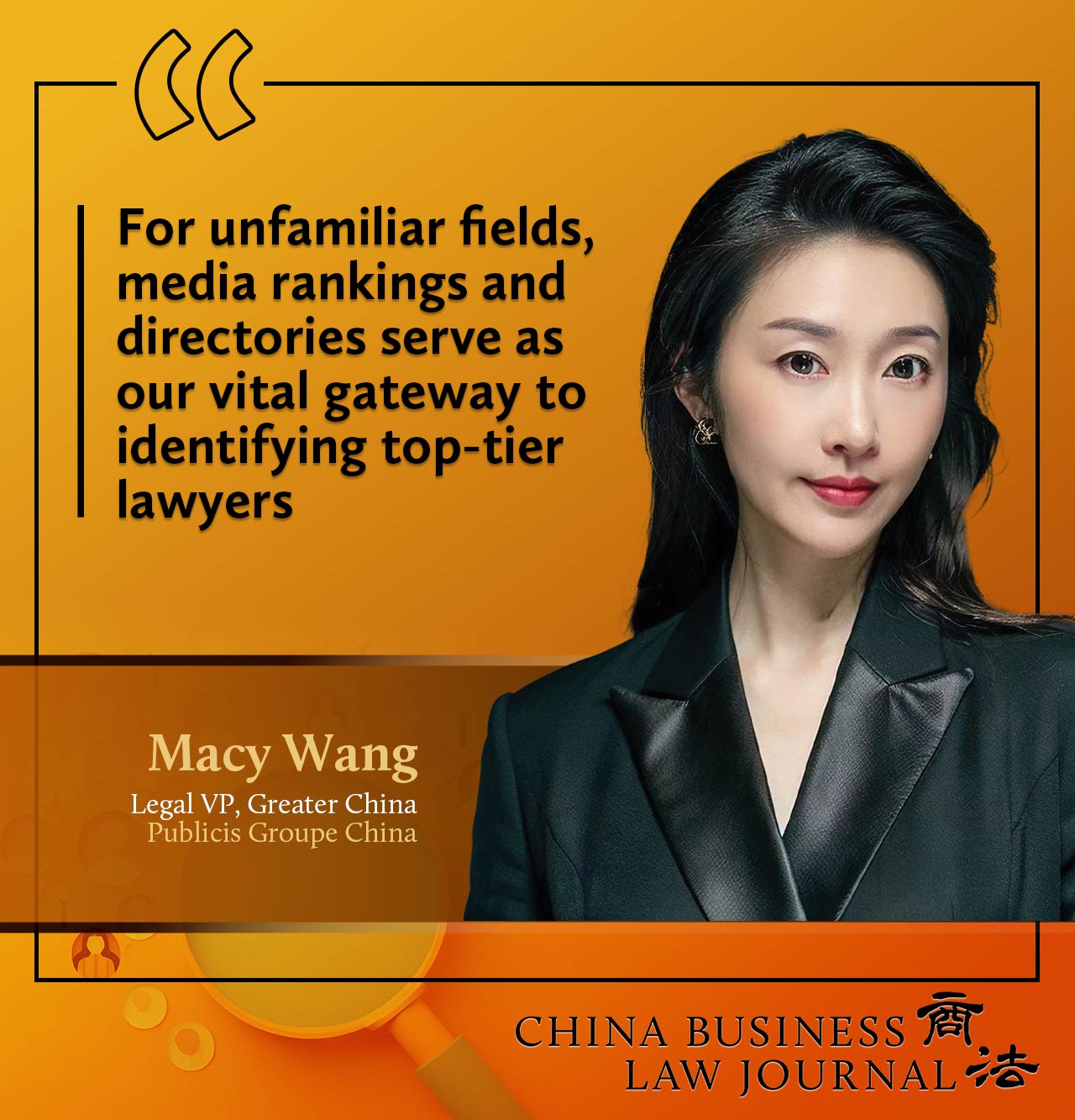
Macy Wang, the Greater China legal vice president at communications multinational Publicis Groupe China, introduces another perspective – the legal team’s own expertise areas. “For routine and highly frequent business types, we rely more on recommendations from peers and friends, or referrals through familiar lawyers,” she says. “For unfamiliar fields, media rankings and directories serve as our vital gateway to identifying top-tier lawyers.”
Some general counsel determine their partnerships based on the very nature of the legal services required. Victor Shen, chief legal counsel of the North Asia legal group at German multinational Henkel (China) Investment, focuses on whether the legal services required involve litigation or non-litigation matters.
For non-litigation, he prioritises top-tier “Red Circle” firms that represent industry-leading standards and boast excellent track records. On the other hand, for civil litigation, administrative litigation and intellectual property disputes, he opts for boutique firms or specific trusted lawyers.
Once channels are chosen, managing them effectively requires ingenuity. Wang Kai, general counsel of agrochemical company Fuhua Tongda Chemical, categorises channels based on the degree of trust.
For trusted channels such as existing relationships and peer referrals, this legal department engages deeply to make professional judgements, swiftly driving the collaboration to fruition. For less trusted channels, such as recommendations from consulting firms, the team conducts rigorous due diligence and verification before adding them to the shortlist.
Where tendering is required, Wang sticks to the procurement procedures, arranging multi-department reviews to ensure absolute compliance.
Biopharmaceutical companies with high technical barriers do not always favour tendering. For instance, John Huang, general counsel at Sansure Biotech, treats it merely as a backup option. “Although the process of tendering is standardised and rigorous, it often fails to discern professional depth in biopharmaceutical niches,” says Huang. “This easily leads to a mismatch where a general team from a major firm wins the bid but lacks industry-specific expertise.”
To match a biotech firm’s demand for legal services of professionalism, compliance confidentiality and long-term collaboration, Huang structures his decision-making process around a distinct formula: “Peer research and referrals as our primary choice, professional legal media rankings as a key preliminary reference, and industry intermediary recommendations as a specialised supplement.”
Meanwhile, he adopts a meticulous workflow: “Conduct case due diligence first, interview core partners, match business sectors, verify service stability and cost-effectiveness, and only then admit them into the panel for targeted collaboration.”