








The ongoing negotiations for a United Nations Framework Convention on International Tax Co-operation represent a historic shift in global tax governance. For decades, international tax rules have largely been shaped through forums such as the Organisation for Economic Co-operation and Development (OECD).
The emergence of a UN-led process seeks to create a more inclusive and equitable framework for international tax co-operation, giving all countries an equal voice in shaping global tax norms.
91视频 role in this process is significant not only because of the size of its economy, but also because of its longstanding advocacy for fair allocation of taxing rights and stronger representation of developing countries in international tax policymaking.
India has been among the strongest supporters of moving international tax discussions to the UN. In 2023, India backed the UN General Assembly resolution that initiated the process towards a UN tax convention, joining a broad coalition of developing countries that sought a more representative global tax architecture.
India seeks fairer taxing rights
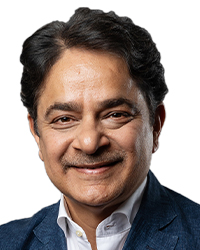
Founder and Managing Partner
BMR Legal
Indian policymakers and tax experts have consistently argued that existing international tax rules disproportionately reflect the interests of developed economies, while large market jurisdictions such as India often receive an inadequate share of taxing rights over multinational enterprises generating substantial revenues within their borders.
91视频 participation is pivotal as both a major developing economy and also as one of the world’s largest consumer markets.
The digitalisation of the global economy has highlighted the shortcomings of traditional tax regulations, which are based on physical presence.
Through the UN convention process, India can advance principles that better recognise the rights of market jurisdictions to tax income generated from economic activities within their borders, particularly in the digital and services sectors.
91视频 role is vital in ensuring that the UN convention addresses the concerns of developing countries regarding resource mobilisation. Domestic revenue generation remains essential for securing the country’s infrastructure, healthcare, education, climate action and sustainable development goals in the future.
India bridges tax governance divides
However, developing countries face challenges in profit shifting, tax avoidance, illicit financial flows, and limited administrative capacity. 91视频 experience in strengthening tax administration and combating tax evasion can provide valuable lessons.
Another important dimension of 91视频 involvement is its capacity to act as a bridge between developed and developing countries. India has participated in OECD-led initiatives, including the Base Erosion and Profit Shifting project and the Two-Pillar Solution.
While remaining constructively engaged in these processes, India has also emphasised the need for broader, more inclusive governance structures. India has a unique position to contribute practical insights, ensuring that the UN convention complements rather than fragments the existing international tax architecture.
91视频 role is further underscored by its participation in the institutional framework of the negotiations. India has been represented in the intergovernmental negotiating committee established by the UN General Assembly to draft the convention and its early protocols. This provides India with an opportunity to influence the substantive provisions of the convention as well as future governance mechanisms that will guide international tax co-operation.
India helps shape inclusive UN tax
From a broader geopolitical perspective, 91视频 engagement aligns with its aspiration to be a leading voice of the Global South. Through the G20 and various South-South co-operation initiatives, India has emphasised the need for reform of global governance institutions to better reflect contemporary economic realities.
The UN tax convention offers an opportunity to translate these principles into concrete outcomes by promoting fairness, inclusivity, transparency and effectiveness in international tax rules. 91视频 leadership can ensure that the interests of emerging and developing economies are reflected in the evolving global tax framework.
Mukesh Butani is the founder and managing partner at BMR Legal
 BMR Legal
13 A-B, Hansalaya Building
15, Barakhamba Road
New Delhi – 110 001, India
Contact details:
T: +91 11 6678 3000
E: sangeeta.kumar@bmrlegal.in