






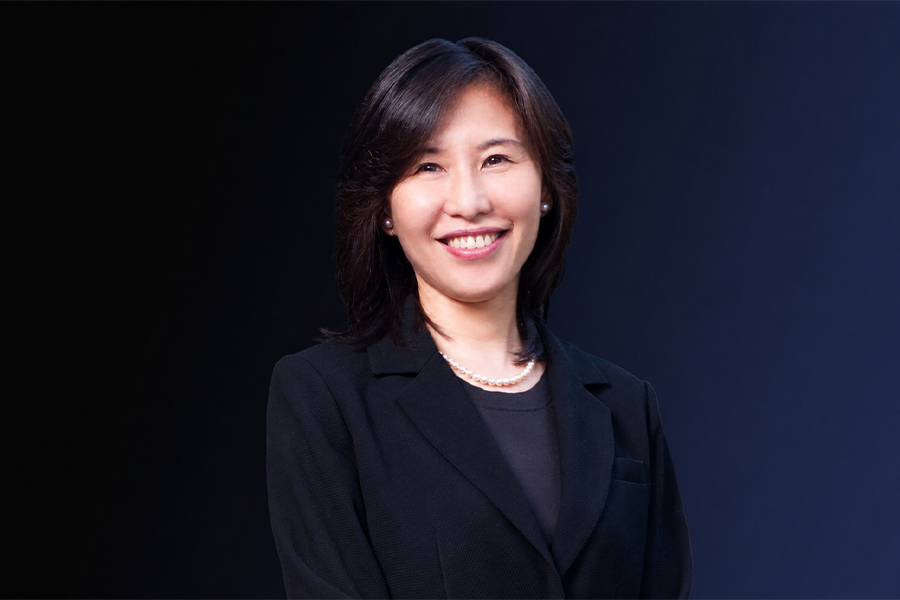


What does it take to be general counsel of one of the world’s largest technology companies? Sylvia Fang talks with Sheryl Ubana about why TSMC’s success begins with never losing sight of its core values
In May 2026, Taiwan became the world’s fifth-largest stock market, with Taiwan Semiconductor Manufacturing Company (TSMC) leading gains as demand for artificial intelligence infrastructure continued to boost semiconductor shares.
TSMC’s stock climbed nearly 50% this year. It came to account for about 42% of Taiwan’s benchmark index, underscoring the company’s outsized influence on both the local market and the global technology industry.
As TSMC grew from an emerging chipmaker into one of the world’s most influential tech companies, Sylvia Fang, the company’s senior vice president and general counsel, grew with it.
When Fang joined TSMC as a junior manager in 1995, the company was generating less than USD1 billion in annual revenue. Three decades later, TSMC generates more than USD122 billion in annual revenue, serves more than 500 customers worldwide, and has become one of the world’s leading semiconductor companies.
For Fang, however, TSMC’s success is not defined by market capitalisation or technological leadership alone. It is rooted in a culture that has remained consistent throughout its growth.
“I’ve been with TSMC for about 31 years and witnessed how it got to where it is today,” says Fang. “TSMC has widely known core values: ICIC … integrity, commitment, innovation and customer trust.
“We don’t take commitments lightly … once we commit, we devote ourselves completely to meeting that commitment.”
For Fang, those principles are far more than corporate slogans. They have become the principles she returns to when navigating the complex legal, commercial and geopolitical challenges that come with helping steer one of the world’s most important technology companies.
The early years
When TSMC was founded in 1987 by engineer Morris Chang, it pioneered what became known as the pure-play foundry model, manufacturing semiconductors exclusively for customers rather than designing its own chips.
The model eventually reshaped the global semiconductor industry, positioning TSMC as the manufacturing partner behind many of the world’s leading technology companies. By the time Fang joined the company, the legal department reflected that stage of the business.
“When I joined 30 years ago, the key components of the legal function were mainly commercial contract negotiation, providing consultation for general corporate legal issues, and maybe some IP disputes,” says Fang.
As the company expanded its global customer base and built operations beyond Taiwan, legal responsibilities grew in parallel. Corporate governance became more demanding, IP disputes became more frequent, and new areas of legal expertise emerged to support a business that was rapidly becoming a global technology leader.
“The legal department’s scope continued to expand over the years, along with the growth of our business and our expansion within and outside of Taiwan,” she says.
Bigger stage, bigger stakes
As TSMC’s profile grew, so too did the legal complexities surrounding the business.
The company’s listing on the New York Stock Exchange in 1997 marked an early turning point, bringing heightened regulatory scrutiny and more stringent corporate governance and reporting standards.
A decade later, geopolitical tensions and trade disputes introduced a new layer of legal complexity.
“Semiconductors had transformed into a top national security and economic priority for global superpowers. And against this backdrop, TSMC, as the world’s largest semiconductor foundry with the most advanced integrated circuit (IC) manufacturing technology, was put under the spotlight,” says Fang.
“We used to be pretty low-key, but we were forced to be seen now. We need to deal with the expectations and requests of governments in various regions and manage the ever-increasing complexity of export control regulations, and so forth.”
For Fang, responding to these challenges meant building a legal function equipped for a global technology leader. She expanded the department beyond its traditional corporate legal role, creating specialist teams covering IP, compliance, commercial transactions and trade secret protection.
As TSMC’s international presence grew, she also established a government affairs team in the US and regional legal departments across the company’s key markets, with local legal heads taking on the additional responsibility of engaging with governments in their respective jurisdictions.
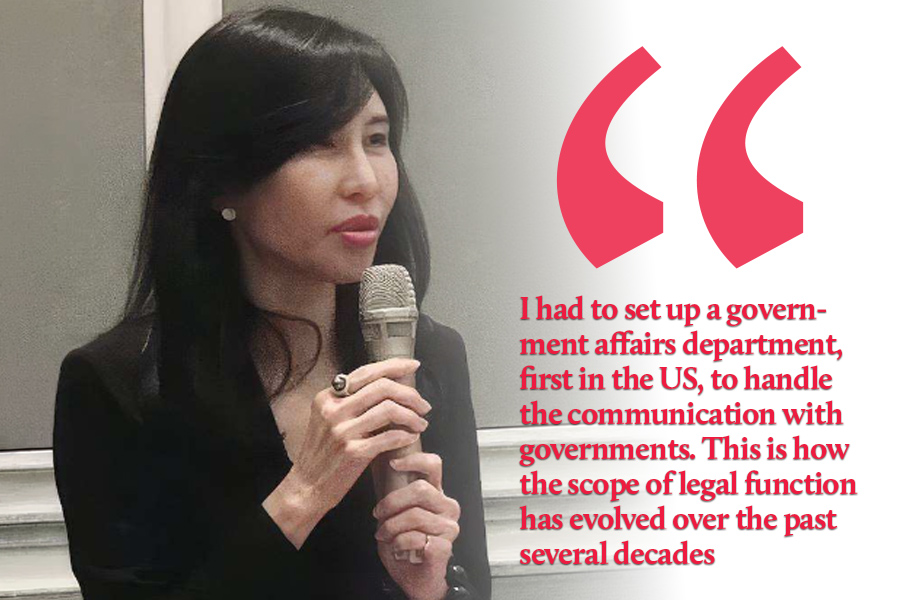
“I had to set up a government affairs department, first in the US, to handle the communication with governments. This is how the scope of legal function has evolved over the past several decades.”
Protecting the giant
For Fang, safeguarding IP begins long before a patent is filed. “Companies like TSMC invest a huge amount of money in R&D each year and trade secrets are the fruits of R&D investment. Loss of trade secrets to a competitor will allow a competitor to bypass years of costly R&D.”
As TSMC expanded its manufacturing footprint internationally, protecting those assets became increasingly complex. Operating in multiple jurisdictions exposed the company to new litigation risks, while broader patent strategies and differing employment laws complicated efforts to safeguard confidential know-how.
“Having physical manufacturing sites in multiple countries grants local courts jurisdiction. Competitors and patent trolls can engage in forum shopping more easily than before,” says Fang.
She says that while Taiwan recognises non-compete agreements with employees under certain conditions, many US states do not, making trade secret protection more challenging across borders.
To strengthen those safeguards, Fang embedded IP protection into the structure of the legal function itself. Alongside dedicated teams overseeing IP and trade secret protection, she established a specialised legal department to support TSMC’s R&D division, ensuring legal teams keep pace with innovation.
“About 10 years ago, I had actually set up an R&D legal department, which is dedicated to supporting our R&D function’s legal needs,” she says.
Protecting TSMC’s innovation is only part of Fang’s remit. As the company has grown into one of the world’s largest technology businesses, it has also come under increasing regulatory scrutiny. “There is certainly higher scrutiny followed by the increasing visibility and the success of TSMC, especially in the antitrust area,” says Fang.
In response, the company has strengthened its compliance framework and invested heavily in training employees to ensure they understand and meet their legal obligations. For Fang, compliance is not merely a regulatory requirement but an extension of TSMC’s culture.
“Integrity is one of our core values,” she says. “One of the things of integrity is that we want to be in compliance with all the relevant laws and regulations.”
As TSMC continues to scale, she believes antitrust remains one of the most significant legal risks facing the company, requiring constant vigilance and a proactive approach to compliance.
Giant’s compass
After more than three decades at TSMC, Fang credits the company’s enduring success not to any single technological breakthrough, but to the principles that have shaped its culture since its earliest days.
“TSMC’s core values … our founder, Dr Morris Chang, long ago identified TSMC’s trinity of strengths as technology leadership, manufacturing excellence, and customer trust … These are all the secret sauce of TSMC’s success as a semiconductor foundry.”
Throughout TSMC’s rise from an emerging semiconductor manufacturer to one of the world’s biggest technology companies, she has built a legal function that evolved alongside the business, expanding beyond contracts and corporate advice to support innovation, protect IP, strengthen compliance and navigate challenges.
Looking ahead, Fang is optimistic about TSMC’s future. “As a technology leader, I believe TSMC will continue to ride on the AI boom and benefit from the multitrillion-dollar infrastructure build-out to drive our growth.”
While the AI boom is expected to power TSMC’s next phase of growth, Fang believes the company’s success will continue to rest on more than technological leadership. In an industry defined by constant change, it is the consistency of TSMC’s values and the discipline to uphold them that she believes will continue to set the company apart.